


‘Who’s grovelling now?’: The summer West Indies humiliated England
‘Who’s grovelling now?’: The summer West Indies humiliated England

Nick HoultSun, August 16, 2026 at 7:00 AM UTC
0
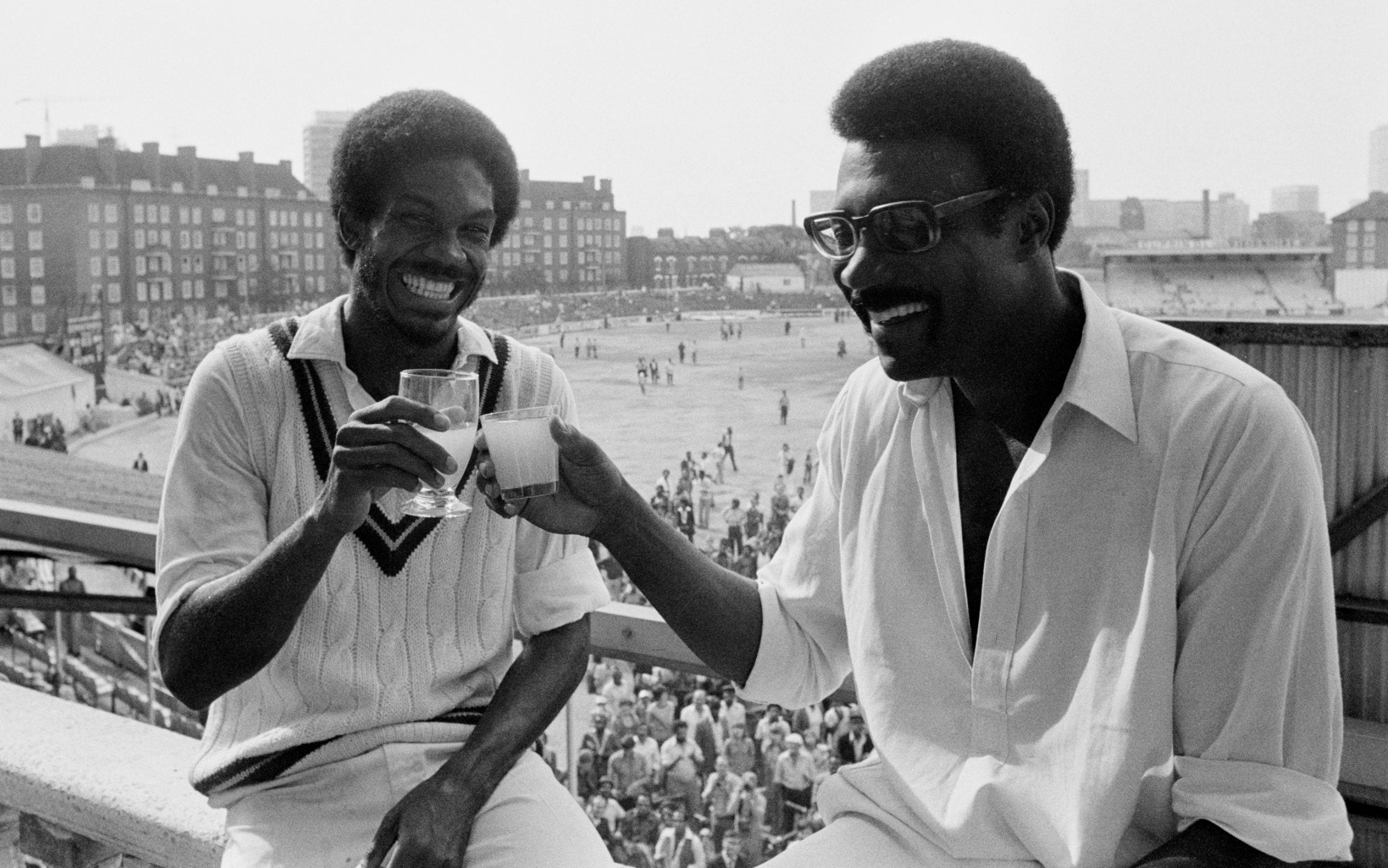
Michael Holding (left) and Clive Lloyd celebrate West Indies’ 3-0 series win over England at the Oval - Dennis Oulds/Getty Images
The seven-inch vinyl disc arrives through the post in a cardboard envelope. Inside is a single almost nobody remembers released in late summer 1976 that brims with an unbridled joy and gloating pride at how the West Indies humiliated England and Tony Greig, their captain.
Who’s Grovelling Now by Ezeike is a reggae song produced by Sid Bucknor, the sound engineer for Bob Marley and the Wailers, and its lyrics celebrate Clive Lloyd’s victory in that long, scorching summer.
It took some tracking down, but for £4.99 from a dealer in Devon it was worth the hunt. I stick it on the turntable, a few crackles audible, and play it to Michael Holding, who is on the other end of the line from the Cayman Islands. He does not remember it.
“Ha, I doubt if it sold many in England,” he says. “It is quite a funny song. I suppose it summed up the happiness and triumph.”
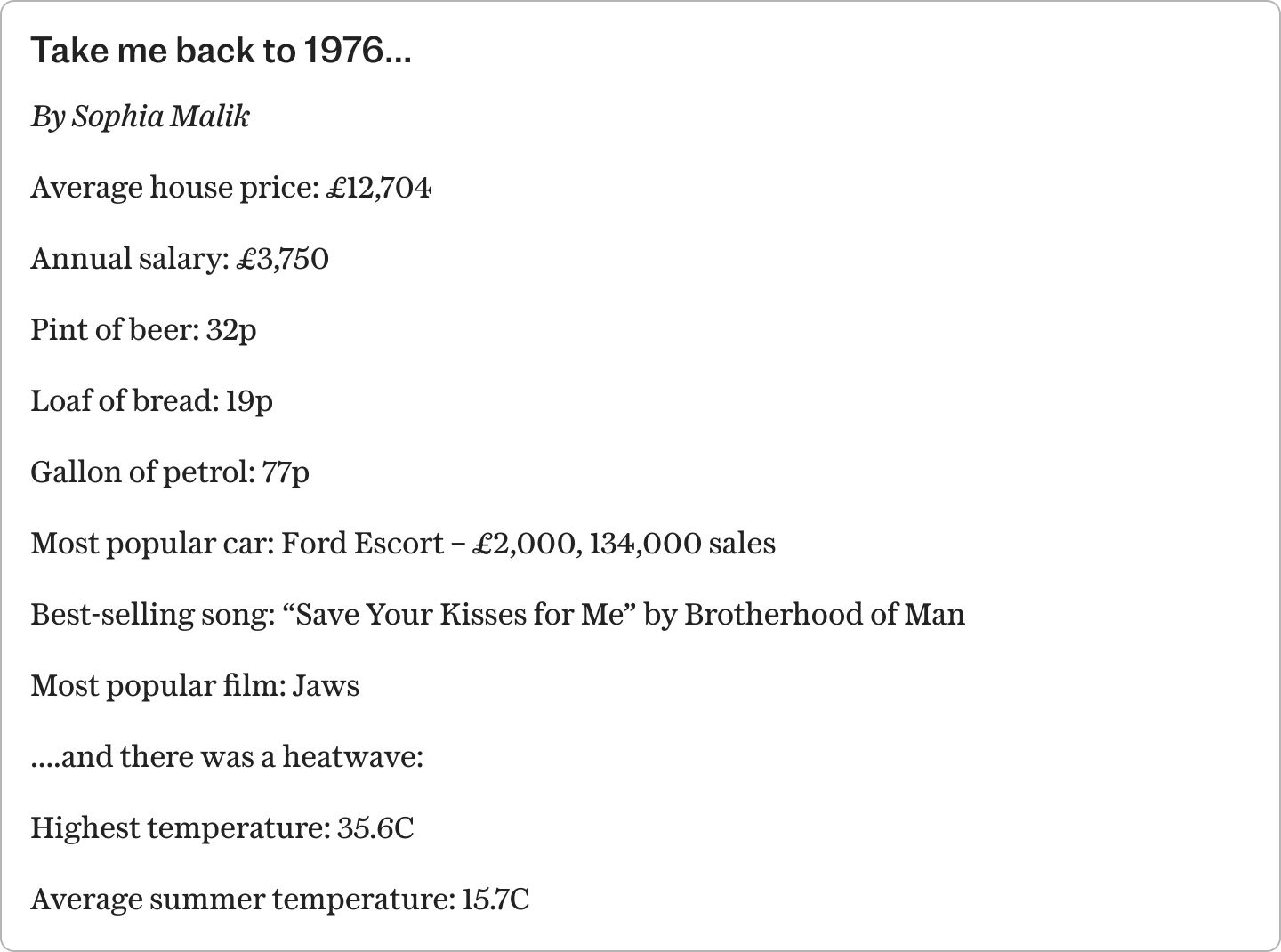
Hot sleepless nights, singed countryside and dried-up reservoirs – the summer of 2026 feels like a replay of 1976 with the England cricket team in a mess as well. Then the old political order was crumbling with the country swapping prime ministers. Harold Wilson out, Jim Callaghan in. Sound familiar? There was economic chaos: inflation, unemployment and an International Monetary Fund bailout. Racial tensions were high, relations between the black community and the police were tense. There was trouble at the Notting Hill Carnival and punk music was fomenting in the background.
Into this walked the West Indies team and Greig, who inadvertently gave voice to an image Lloyd and his players were desperate to break down, not just for themselves, but for their supporters.
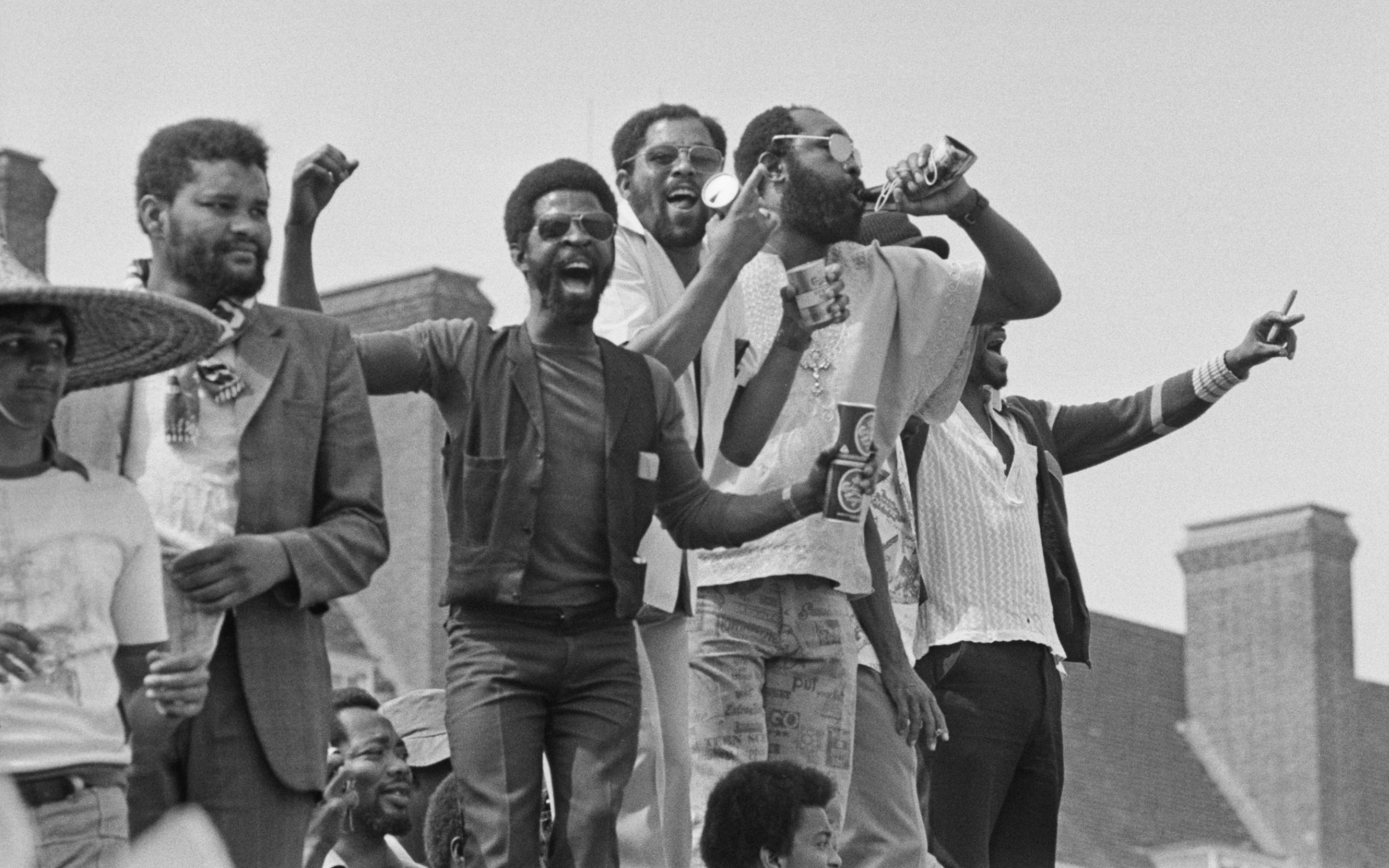
West Indies supporters backed their team vociferously throughout the 1976 tour of England - Angela Deane-Drummond/Getty Images
“Sometimes a single spark will set fire to a Test series,” John Arlott said in a BBC film about the series. “In that burning summer, flames were fuelled by a single remark from Tony Greig.”
Go to Sussex’s ground in Hove now and you can still see the pavilion balcony where Greig gave an interview on the eve of the Test series and delivered a throwaway remark that would live with him for the rest of his life.
“I think you must remember that the West Indians, these guys, if they get on top, they are magnificent cricketers, but if they’re down, they grovel. And I intend, with the help of Closey [all-rounder Brian Close] and a few others, to make them grovel.”
Over to Ezeike:
“Who’s grovelling now?
“Who’s grovelling now? “Greig, you’re a loser somehow,
“If you had your way,
“You would never let us play.
“So tell me, who’s grovelling now?”
Greig was bowled five times in that summer and every time he walked to the crease the West Indies attack added a yard or two of pace. “A rallying call to their supporters. A stick to beat him with at every entry and exit,” Arlott said.
Greig never backed away, took it all in his stride and was magnanimous enough to beg for forgiveness from the West Indies fans in the final Test at the Oval, dropping to his knees and crawling towards the pavilion.
“My speech to the team? Well, he did it for me,” Lloyd says. “He motivated us. When you have somebody saying things like that... I don’t know if he understood what the word ‘grovel’ meant. It was not very pleasant. So the guys got to show him that we were not calypso cricketers, which was a phrase I never liked because it said we had no substance. Just flamboyant and no real fight.”
A year before he died in 2012, Greig apologised for the remark. “I spent years with Greigy in the Sussex dressing room and never heard him say anything that was racist,” John Snow says. As for Holding, Greig was a firm fan after the series and tried to sign him twice: once for Sussex, offering him £10,000 and a sponsor’s car, and when he became the recruiter for Kerry Packer’s World Series Cricket.
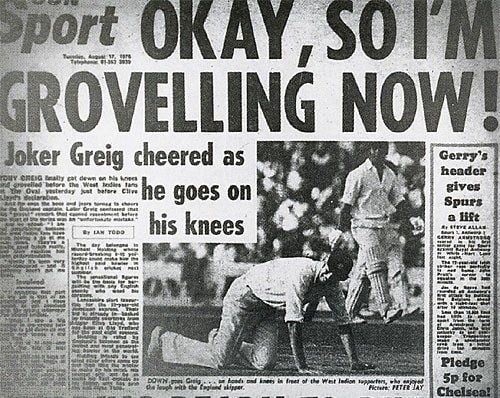
Tony Greig offered a symbolic apology for his pre-series remarks
Holding was not interested because after the summer of 1976 he “despised” Greig and was “disgusted with the man”. But Holding softened with age and a friendship grew in the commentary box. “We worked together a lot. I went to his home, we had a great relationship. I got to realise that he wasn’t the man he seemed to be when he made that comment and everybody thought he was a South African coming from a racist country. It wasn’t quite that.”
Holding was 22 in 1976, had been reduced to tears on a tough, uncompromising tour of Australia before the trip to England where West Indies were soundly beaten and Greig thought he saw chinks to exploit: that they were not a very good side chasing a game.
Lloyd recognised change was needed, ditched spin and released on the world the four-pronged fast-bowling tactic that would carry West Indies to dominance. Holding, Andy Roberts, Wayne Daniel, Vanburn Holder took 84 of England’s 91 wickets and caused a storm over their use of the short ball, particularly in the Old Trafford Test.
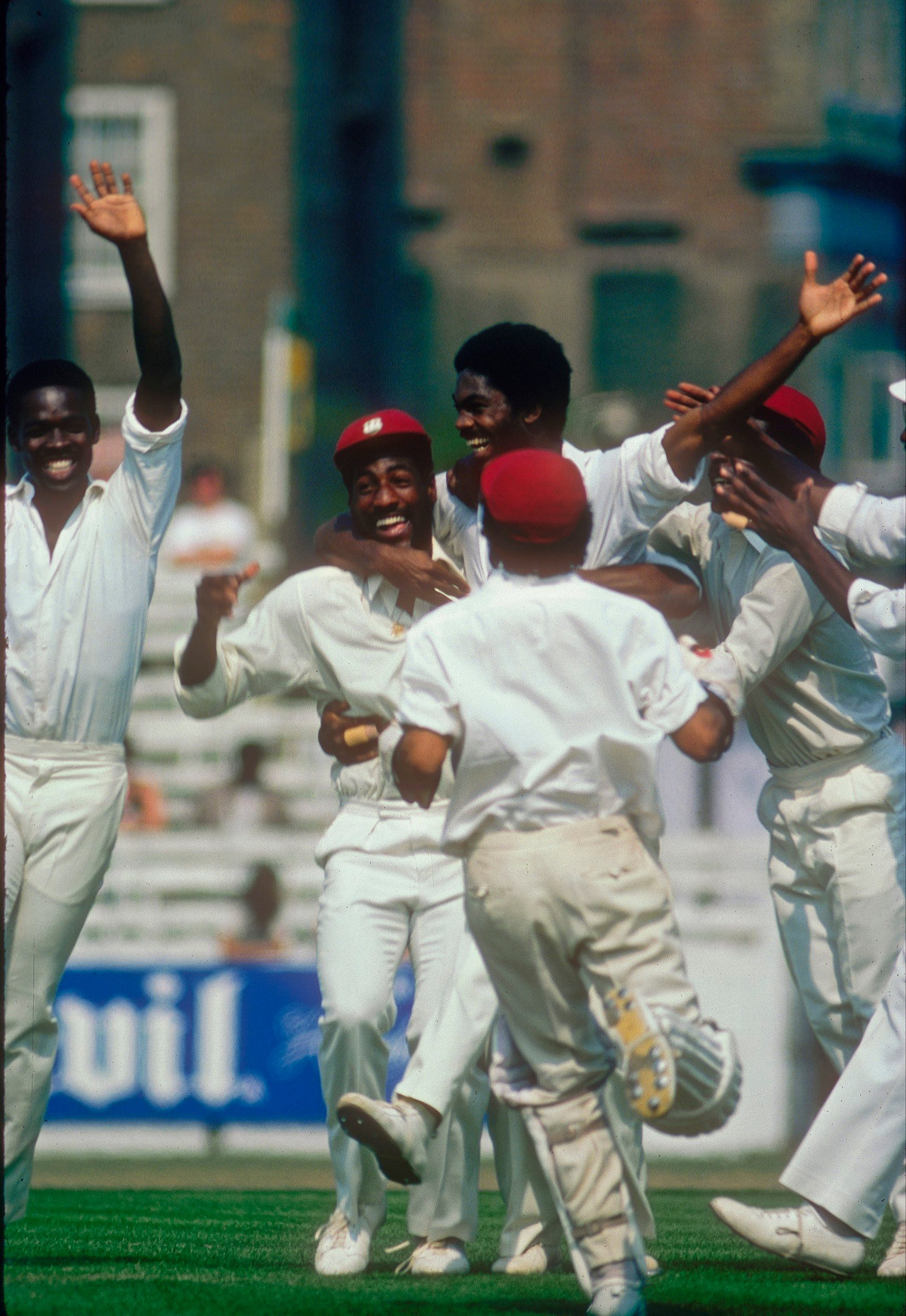
Michael Holding and his West Indies team-mates celebrate dismissing Greig at the Oval - Patrick Eagar/Getty Images
England were a mess. Close was recalled at 45 years old to open and resist the pace along with John Edrich, who was 39, because the selectors were worried about exposing younger players to what could be a traumatic experience. Dennis Amiss was deemed unselectable, in modern parlance, because of worries over the short ball. David Steele was a brave No 3 who had withstood Dennis Lillee and Jeff Thomson the year before. Bob Woolmer had scored an Ashes hundred in that series, and debuts were given to Mike Brearley and Chris Balderstone. Frank Hayes was recalled and England used 21 players, only four featured in all five Tests.
The 3-0 series win was a walkover. Three of the five Wisden Cricketers of the Year were West Indians: Holding for his 28 wickets at an average of 12.71, Viv Richards 829 runs at 118.42 and Gordon Greenidge, who broke through in Test cricket with three hundreds. Arriving in early May and going home in the first week of September, West Indies played 26 first-class matches, winning 18. They also whitewashed England in the three-match one-day series.
“They looked at me like a father figure. I was older than they were,” Lloyd says about his leadership style. “Some of them had never played Test cricket, or not very much, so we worked hard. We worked together. We shared everything. It worked.”
Holding bowled just two no balls that summer, his discipline at 22 remarkable. He was still only a part-time cricketer, working as a computer programmer for the government in Jamaica.
“I remember going home from the England tour and going to the Barclays bank where I had my account and I went to the manager with my cheque. He looked at the cheque and he said, ‘Mike is this all?’ I was proud of the amount of money. It was £500. I was living at home and earning 120 Jamaican dollars [£75], so I thought £500 was a lot of money. It wasn’t a lot of money, but, living with my parents, I thought I was OK,” Holding says.
Advertisement
Glandular fever kept Holding out of the first Test, a draw at Trent Bridge where Steele scored his only England hundred, but the match belonged to 24-year-old Richards, who scored 232. Holding recovered from illness for the second Test at Lord’s, but Richards went down with the same bug, missing a rain-affected draw.
The series lives in the memory for two Tests, the third at Old Trafford and the fifth at the Oval, both for storming West Indies victories and the ceaseless support of their jubilant fans.
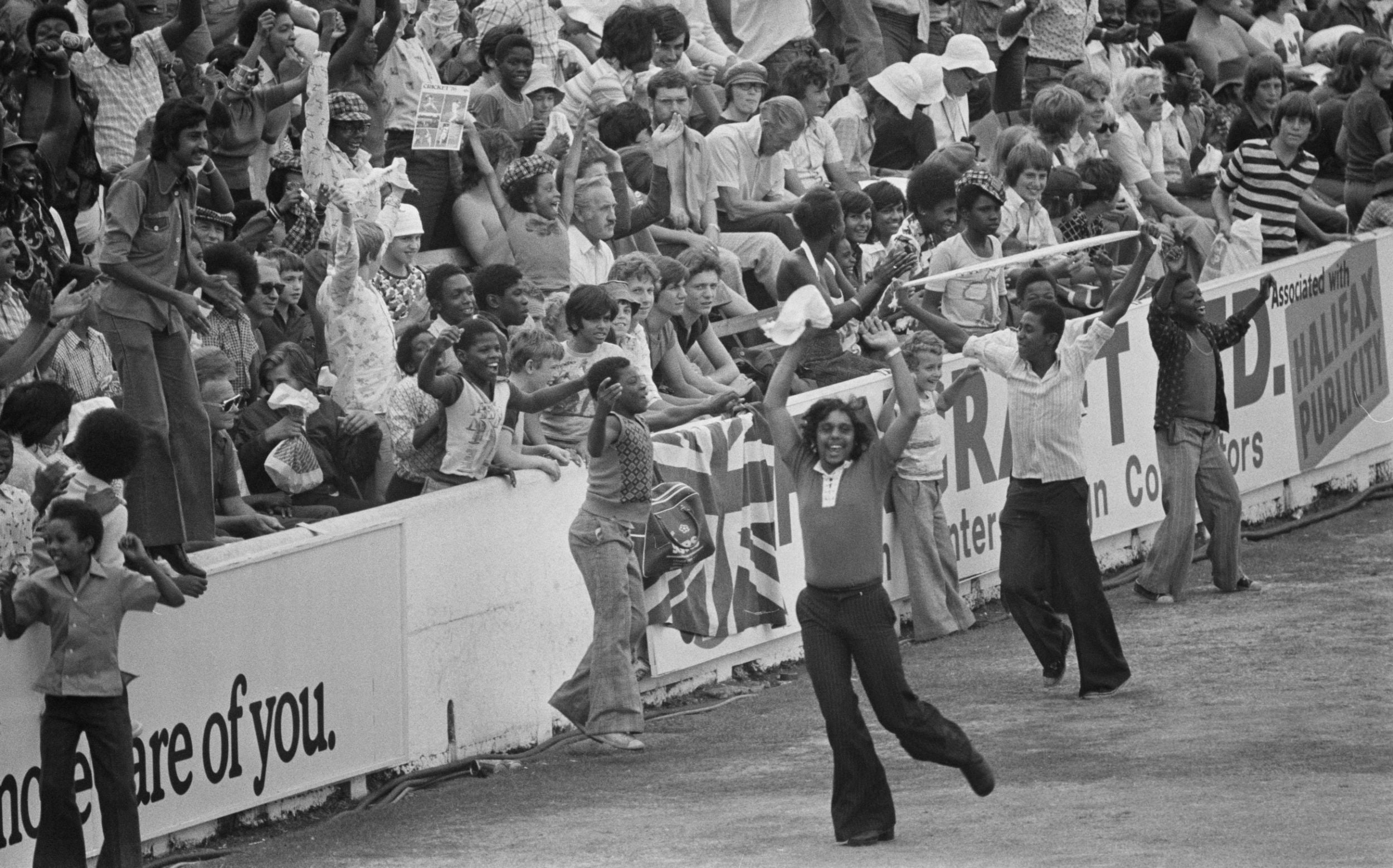
There was no containing West Indian celebrations at the fifth Test - Getty Images
Old Trafford was visceral. Watch the footage of Holding bowling to Close and Edrich on the third evening, taking blows to the body and swaying – without helmets – out of the way of bouncers in the fading light on a monstrously difficult pitch which had a ridge halfway down designed for Holding, Roberts and Daniel to exploit, and you marvel nobody was hurt.
For Hayes it is a memory that has lived with him for ever. Recalled to the team, he was back at his home ground, Old Trafford. He had scored a hundred on debut against West Indies in 1973 but peaked early, his next highest score was 29 before he was dropped the following year. Back for Manchester, he knew this was probably his last chance.
“The Old Trafford square had gone, I’m afraid. It was a diabolical track,” he says. “Because of the heatwave there was no green grass knocking and this thing had undulations, there were huge cracks all over it. In fact, I’ll go back a week, and they’re just about to pick the Test team, and I was playing for Lancashire against Surrey and John Edrich was playing. I got 90-odd, I think, so that was very timely. We were walking back from practice before the game, and John said what about this wicket of yours? What’s it like? I said, it’s not too clever, but let’s walk out on it. So we walk from the practice ground, through the main pitch, on to the square.”
Edrich was horrified by what he found. “He went, ‘Christ.’ And he started to walk off with a limp. I think you can play on this one, Frank. He inferred he had damaged a muscle.” Edrich did play. Like Close, it would be his last Test for England.
Greenidge fired a fine hundred in the first innings, England had a tricky hour before the close. “I was down for No 5,” Hayes says. “We had them nine down and then David Steele collapsed in a heap with a migraine. Bob Woolmer had a dicky stomach. All of sudden I was down for No 3. Not ideal preparation. I was there watching mayhem. Closey was give out lbw and Steeley jumped up and walked out to bat. He beat me to the door.”
England were in chaos. Hayes batted the next day and was out for nought. “Walking out in front of a capacity crowd at Old Trafford, in front of my home crowd, it sent shivers down my spine. In those days, I had pretty sharp reflexes and wasn’t unduly bothered by the pace, but I got one I couldn’t play from Andy Roberts – puff of dust, it went through the top of the track, and I gloved it. You walk back and you’re in slow motion. You’ve got nought in your comeback Test match, in front of your home crowd, and another chance to prove yourself for England has gone. Pretty desperate stuff, really.”
England were all out for 71, a second Greenidge hundred of the match and Richards’s 135 enabled Lloyd to declare before tea on the Saturday, leaving England requiring 552 to win or 13 hours to bat for a draw.
What followed was a tense passage of play as Close and Edrich were bombarded until umpire Bill Alley warned Holding for intimidatory bowling.
Close was told to go to hospital for an X-ray. Instead he asked for a Scotch whisky. Lloyd was angry his bowlers had bowled too short, carried away by the pace, bounce and their supporters.
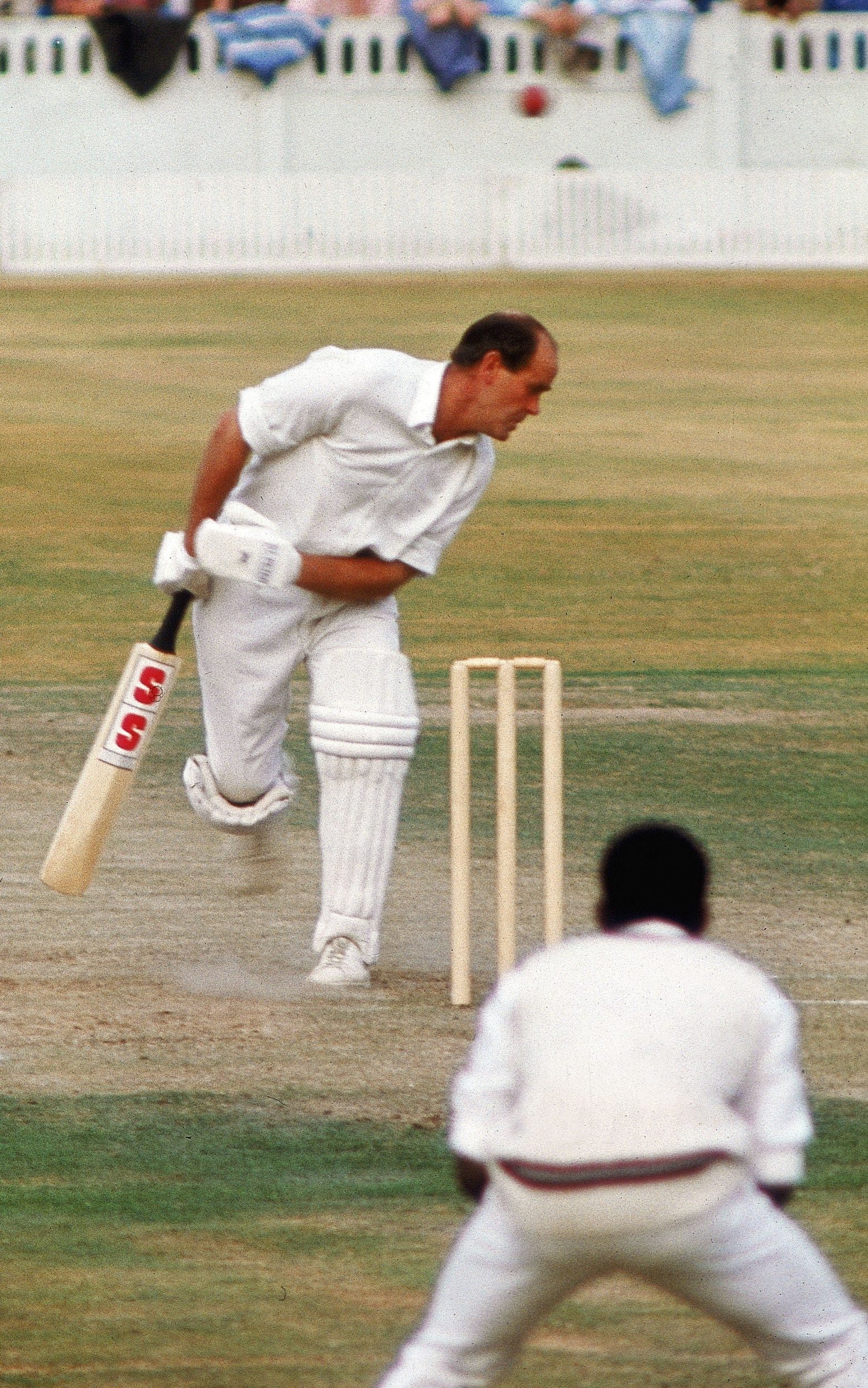
A Holding bouncer flies over Brian Close at Old Trafford - Adrian Murrell
“Closey said something to the effect that they were twice as quick as [Wes] Hall and [Charlie] Griffith, who he’d faced way back in the 1950s,” Hayes says. “Wayne Daniel was swinging it at a 100 mile per hour, on to a crack, which is about a mile deep, and six inches wide. It was pretty impossible to bat against that. People say, well, they got 400-odd on it, and Greenidge and Richards scored hundreds, but they were facing bowling that was 10 miles per hour slower. It was unnerving. Sitting side-on then at Old Trafford and seeing the keeper taking it above head height.”
Pat Pocock, who was nightwatchman, described the umpiring that night as “appalling” for letting the barrage continue. R. W. Cockshut, an English doctor watching from the ground, wrote to the papers saying that, unless the bouncer was banned, cricket could face up to 10 deaths and 40 brain injuries.
The press jumped on it. The Sun demanded a stop to “this mayhem”. The Daily Mail called it “an attack that should be outlawed”. The Telegraph, a little more sedately, praised Edrich and Close for surviving. Tony Lewis, the former England captain and then correspondent of The Sunday Telegraph, wrote: “Only the brave, technically sound and extremely lucky all rolled into one were going to survive. The senior citizens were all of these.”
Holding is unrepentant. “I don’t blame myself. I don’t think any of the fast bowlers were to blame because the ball was taking off from a length. Talk to the groundsman. If he couldn’t prepare a better pitch, that’s your problem.”
West Indies won by 425 runs, the dam broken. A 55-run win at Leeds two weeks later in the fourth Test sealed the series. It was a game remembered for Snow’s last Test for England and his 200th wicket. “I did all what I wanted to do and everything else. And so I was moving on to other things, mentally. My ambitions were not as strong, physically I was going.” Hayes made seven and nought. “I knew that would be it,” he says.
The Oval, for the fifth Test, was parched and dry. The match’s 50th anniversary fell this week and looking back at the sights and sounds on YouTube, it was another era. No Hundred, no names on the shirts and a vociferous West Indies support that is long lost.
It was Holding’s match for his eight for 92 and six for 57 on the fifth day, with Amiss making a memorable return with a double hundred, but Richards put on an exhibition, his 291 with 38 fours was genius – a final pummelling of England when they were down on the canvas.
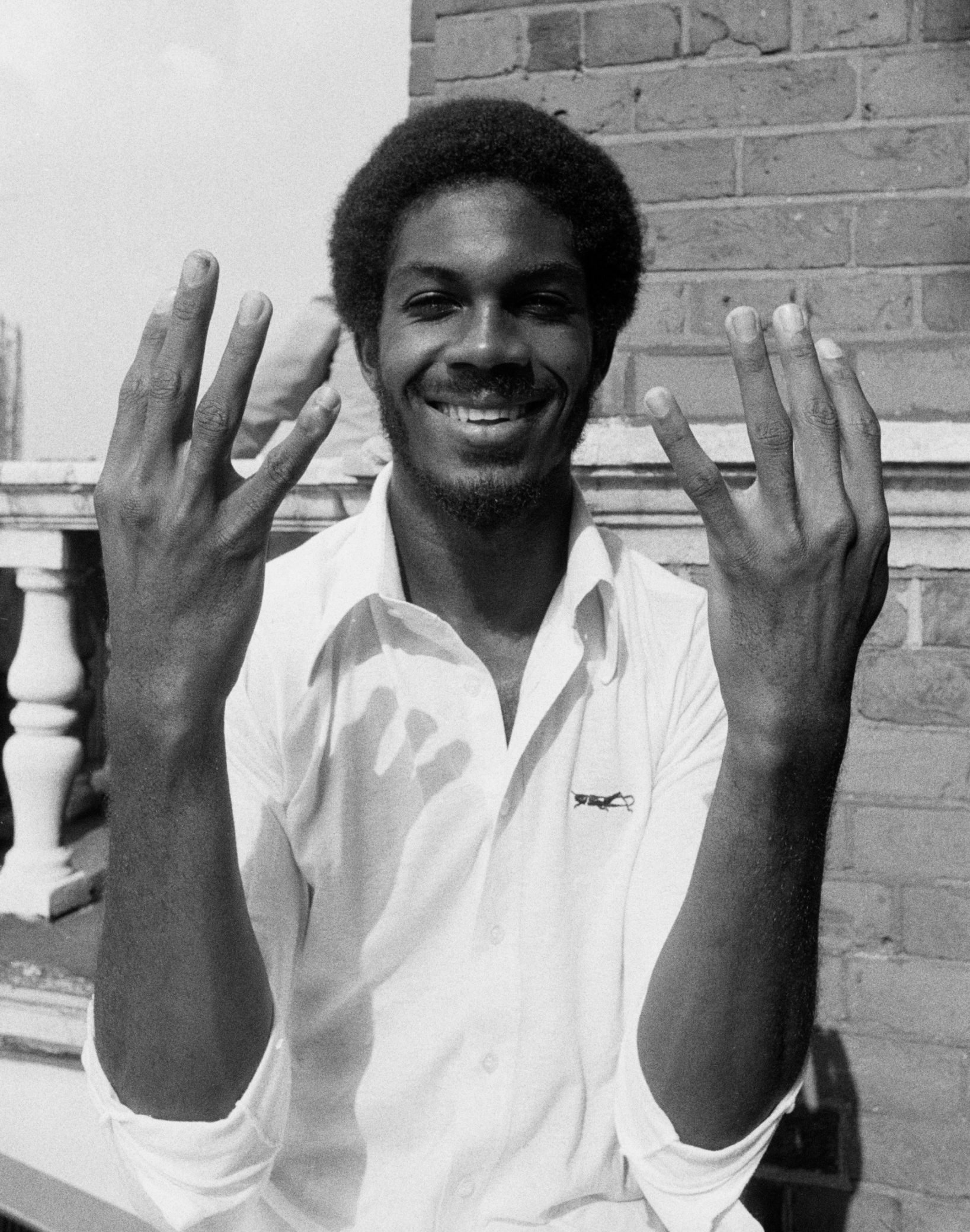
Holding holds up eight fingers, one for each wicket he took in the first innings at the Oval - Dennis Oulds/Getty Images
Did Holding ever bowl quicker or better? “Yeah lots of times,” he says. “I was just 22 years old, running in, everything clicking. I was bowling full, the ball was reversing, not that we knew about reverse swing then, and I was able to get the yorkers in, but I wouldn’t say I was planning how to get batsmen out. I didn’t know anything about all that.”
There was a pitch invasion when he bowled Greig off his pads for four. “Dickie Bird told me that this guy ran on to the pitch and gave him a £5 note and said: ‘This is for Mikey.’ You know Dickie, he liked to embellish stories. Anyway, he said he put it in the Yorkshire Building Society.”
Culturally and from a cricket point of view, the summer of 1976 was of its time, a long-gone period. “The cricket landscape has changed so much,” Holding says. “You know it’s difficult to see that happening again, irrespective of the team touring. Touring teams turn up a week before the first Test, and a few days after their last game, they’re gone again. We spent a long period of time in whichever country we went to, and especially in England, we played every county, some counties twice. It was a proper tour. It meant so much to the fans, I didn’t recognise this at the time, but they had pride when they went to work and could say they saw us beat England.”
The final word goes to Ezeike.
“Remember you were the teachers in the beginning,
“Showed us the way to play the game.
“So you are the ones to blame,
“If you can’t find the players to play the game,
“Go back to school again.
“Who’s grovelling now…”
Source: “AOL Entertainment”
