


Is the US government's spending problem killing your American dream?
Is the US government's spending problem killing your American dream?

Medora Lee, USA TODAYFri, August 21, 2026 at 8:54 AM UTC
30
The U.S. government's massive spending spree is going to make it even harder for Americans to keep pace with rising costs and reach the American dream, economists said.
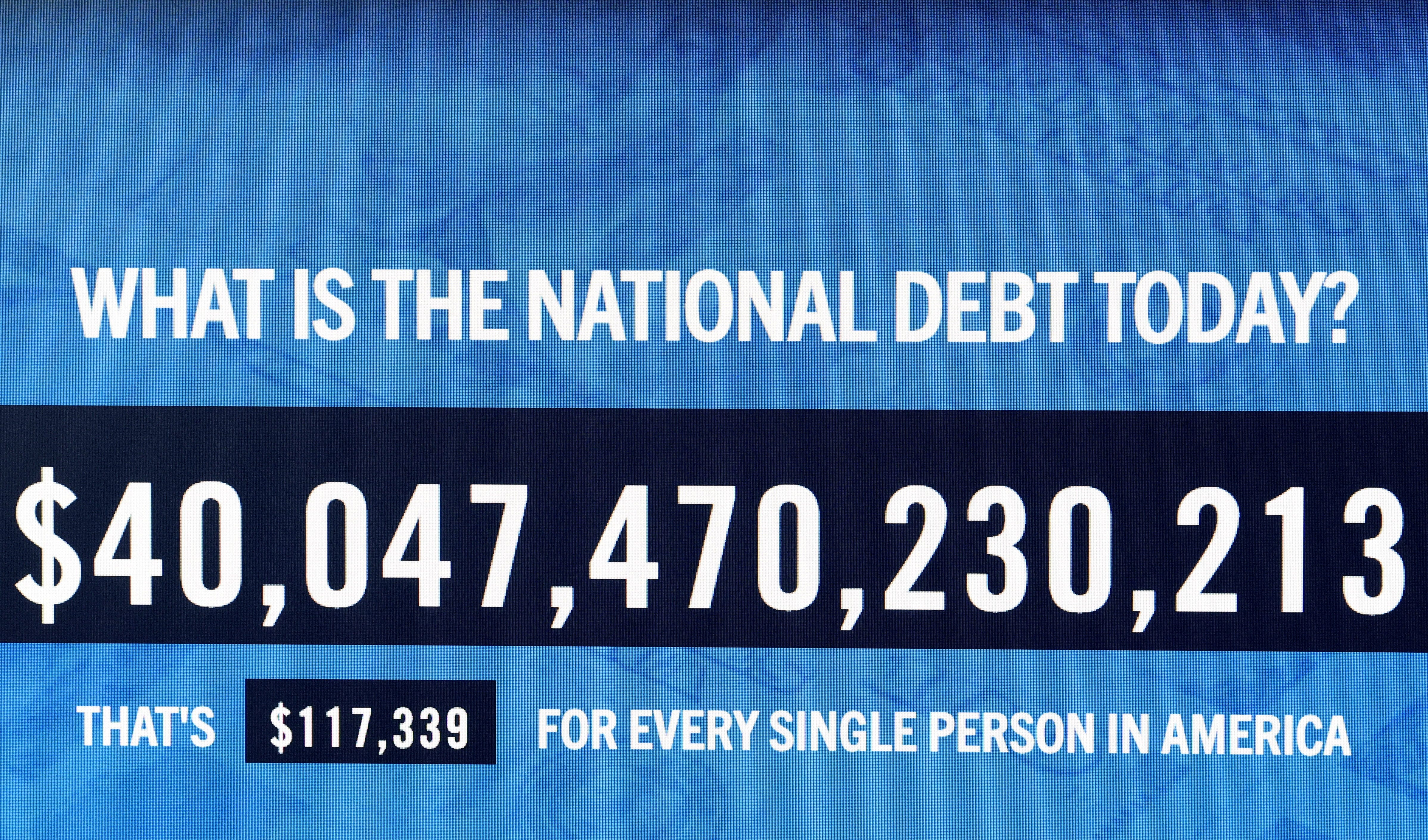
The U.S. gross federal debt surpassed $40 trillion for the first time in history, the U.S. Treasury said this week. That's a number with 13 zeros and looks like this:
$40,000,000,000,000.
It's more than double the $19.95 trillion when President Donald Trump was sworn in for the first time in January 2017, and it includes $32.266 trillion in Treasury securities held by the public and $7.782 trillion in intra-governmental debt holdings.
Even if most Americans may not be able to fathom those numbers, they're already feeling the effects of them everyday, economists said. Soaring debt, if unchecked, boosts inflation and interest rates and reduces wages and opportunities for Americans, they said.
"The $40 trillion national debt has a direct influence on everyday living costs," said Caleb Quakenbush, director of fiscal policy at the nonpartisan, nonprofit Bipartisan Policy Center thinktank. "Our nation's lenders, concerned about the lack of a plan to get our fiscal house in order, are asking taxpayers to pay more for what government borrows. That also raises the cost of debt for everyone else. If a mortgage is out of reach, or financing for your business has gotten more expensive, the debt is part of the reason."
How does national debt hurt salaries?
To pay for increased spending, the government issues debt like Treasuries and bonds with higher interest rates to attract investors. When investors put money into government debt, they do so at the expense of more productive private investments – what economists refer to as the "crowding out effect."
Those private investments might include the development of new products and technologies, construction of buildings and roads through loans, or buying company stock or bonds.
If there's less investment in technologies that make it easier and cheaper to produce goods and services, prices are likely to increase, and shortages may be more likely, the Government Accountability Office said.
The Congressional Budget Office estimates that for every dollar added to the deficit, private investment loses 33 cents, which diminishes economic growth and wages over time.
After three decades, CBO found that the average annual per-person income would be $9,000 lower, or reduced by 10%, if government debt continued to grow instead of being pared down.
Americans won't actually see a drop in their paychecks, but it's money they will potentially never pocket, economists said. Americans, especially younger and future generations, will feel the loss with a lower standard of living.
Advertisement
What even is the American dream? Young people are rejecting boomers' view of success
Not only will the economy and wage growth slow, but there’s potential for higher taxes and interest rates, economists said.
Rising debt equals rising interest rates
A key figure of the debt report is the public debt-to-gross domestic product, or GDP, ratio, which measures how much of the government debt is held by non-government entities relative to what the nation produces annually. The ratio has consistently risen.
CBO estimates that debt-to-GDP ratio will rise from 101% this year to 120% in 2036. That's well above the previous record of 106% reached after World War II. Every 10% increase in the debt-to-GDP ratio translates into a 0.2 to 0.3 percentage-point increase in interest rates, a 2019 CBO study said.
"More debt leads to higher interest rates, making credit less affordable," The Budget Lab at Yale said in March.
For example, the rise in long-term interest rates since 2015 due to the ballooning deficit significantly raised the costs of a 30-year mortgage on a median home price in 2025 by about $2,500 annually. That's roughly $76,000 more that people paid over the life of the loan compared to if federal debt had remained static.
How does exploding government debt affect social programs?
Similar to how a growing deficit crowds out private investments, it also squeezes public investments, economists said. Just the interest payments alone on the massive debt are the third-largest part of the government budget, after healthcare and Social Security.
"The cost of servicing our debt is already consuming resources that could be used to grow our economy, strengthen our national security, and improve Americans’ lives," said Rep. Lloyd Smucker, R-Pennsylvania, vice chair of the House Budget Committee, in a statement.
The main way to reduce the swelling deficit is to put an ice pack on it, economists said. Some economists suggest Congress commit to limiting spending, especially in the fastest-growing areas.
"Much of that borrowing is to sustain fast-growing Social Security and Medicare costs, which face looming trust fund shortfalls in 2032 and 2033," Quakenbush said. "Any path to stabilizing the debt will require lawmakers to confront the challenges of those programs head on."
Some options for Social Security have included reducing benefits for high earners, raising the full retirement age and raising the income cap for the payroll tax that helps fund Social Security benefits.
Medora Lee is a money, markets and personal finance reporter at USA TODAY. You can reach her at mjlee@usatoday.com and subscribe to our free Daily Money newsletter for personal finance tips and business news every Monday through Friday morning.
This article originally appeared on USA TODAY: Is the US government's spending problem killing your American dream?
Source: “AOL General News”
