


Democratic Senate candidates pursue a new strategy in rural states: Dropping out
Democratic Senate candidates pursue a new strategy in rural states: Dropping out

Sahil KapurThu, July 30, 2026 at 4:48 PM UTC
3
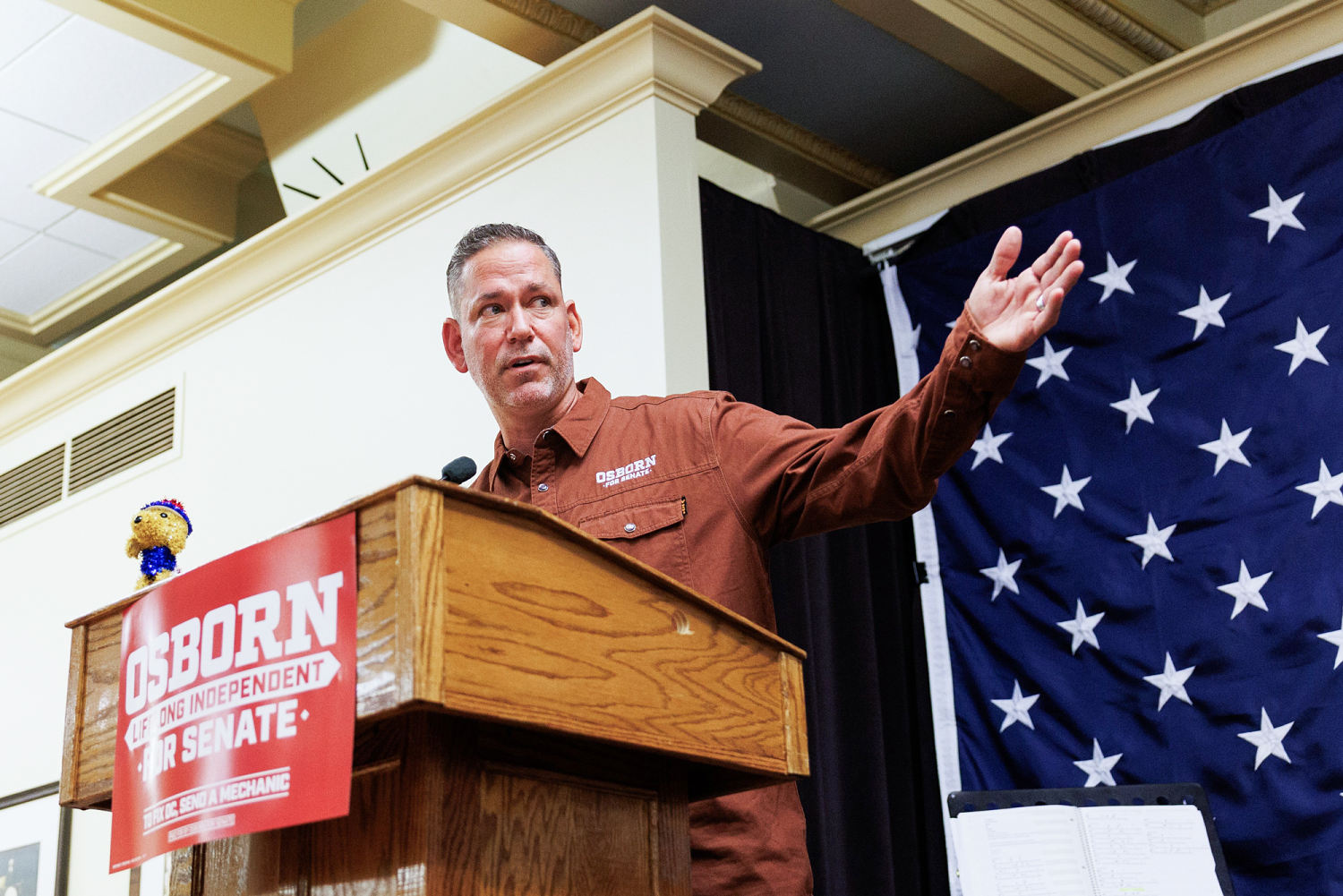
Dan Osborn speaks during a launch event for his U.S. Senate campaign in Omaha, Neb., on July 26. (Nikos Frazier / Omaha World-Herald via Getty Images file)
Facing slim prospects in rural red states, Democrats are embarking on a new tactic to expand the Senate map: encouraging doomed nominees to drop out of the race, in order to empower independent candidates to take on Republicans one on one.
The best-known example of the push is in Nebraska, but the maneuver also has boosters in Idaho, South Dakota and Montana — states where the Democratic Party used to be competitive but has not run remotely competitive races this year due to a tarnished party brand.
In Nebraska, independent candidate Dan Osborn is running against Republican Sen. Pete Ricketts. His cause got a jolt this month when Democratic nominee Cindy Burbank dropped out and removed her name from the ballot, erasing the prospect of a split in the anti-incumbent vote.
“For Democrats in some of these races where the independent has a much better shot, it’s really incumbent on those Democrats to put their ego aside,” said Neera Tanden, a former adviser to numerous Democratic presidents and the president and CEO of the Center for American Progress. “If we believe this is an existential moment for the country, it is really crucial to elect people who will be a check” on President Donald Trump’s power.
Two years ago, Osborn turned heads by coming within 7 points of defeating Republican Sen. Deb Fischer on the same ballot where Trump carried the state by 21 points. This year, the national environment is expected to be more hostile to the GOP, creating some optimism that he could pull off an upset against Ricketts, Fischer’s colleague.
“Ugh,” Fischer told NBC News when asked about Osborn’s prospects in 2026. “I think Nebraskans see through this guy.”
Similarly in Idaho, Democratic nominee David Roth dropped out Tuesday, giving independent challenger Todd Achilles a one-on-one contest against Republican Sen. Jim Risch, who is running for a fourth term.
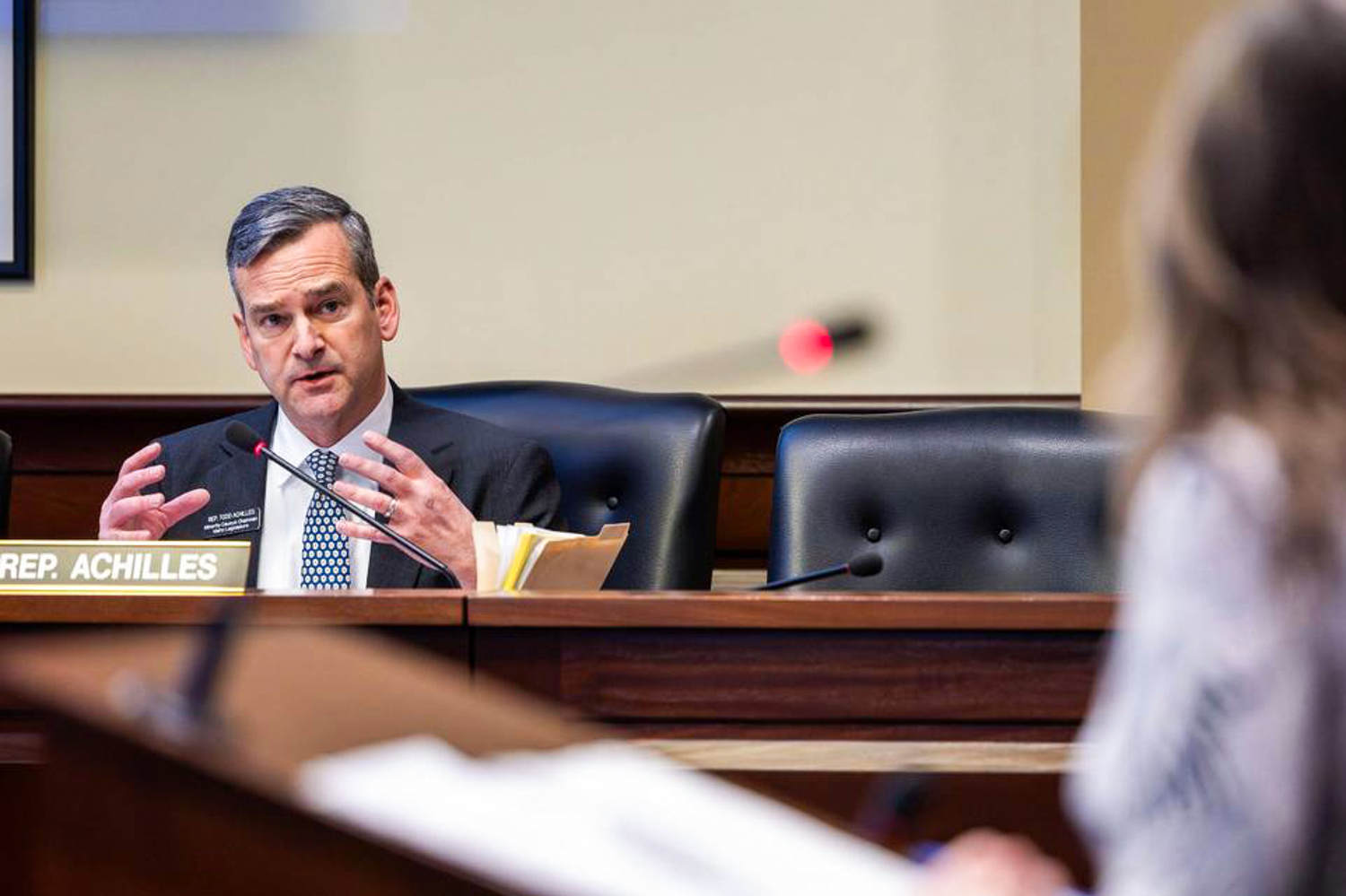
Idaho Senate candidate Todd Achilles. (Darin Oswald / Idaho Statesman / TNS via Getty Images file)
Now, prominent Democrats nationally and in two more states are calling on more of the party’s Senate nominees — Alani Bankhead in Montana and Julian Beaudion in South Dakota — to drop out. Both states feature independent candidates — Seth Bodnar in Montana and Brian Bengs in South Dakota — who, like Osborn, are breaking with Democratic orthodoxy on some cultural issues that have made the party unpopular in small-town America.
The Democrats are circulating polling that shows the Democratic candidates getting clobbered, while the independent candidates in those states are within striking distance of Montana GOP nominee Kurt Alme and Sen. Mike Rounds, R-S.D., respectively.
These strategists are appealing to their patriotism by saying that withdrawing is the best chance to take Senate control away from Trump’s GOP allies.
They see it as a win-win situation, arguing that even if the independent candidates lose, the one-on-one matchups could spook Republicans into steering money away from competitive races like Georgia, Iowa and Maine to hold on to deep-red states.
“This is an opportunity for Montana to flip a U.S. Senate seat and save this country,” said Nancy Keenan, the executive director of the Montana Democratic Party. “Polling consistently shows that Seth Bodnar is the only candidate that can defeat Kurt Alme. But it has to be a head-to-head race.”
And what about Bankhead, the nominee chosen by Keenan’s party in a state that had at least one Democratic senator for a century before Republicans broke that streak in the 2024 election?
“I do believe she needs to drop out. She does not have a credible campaign. She has no money and no team,” Keenan said, calling Bankhead “naive” and “delusional” if she thinks she can win.
“The state has changed and we are ruby red,” she added. “This is an opportunity to tip the U.S. Senate in Democratic favor.”
Bankhead’s campaign didn’t immediately return a request for comment. She has so far resisted calls to step aside, telling NBC Montana recently that she has spoken to Bodnar and “reiterated my position that I am the Democratic nominee.”
Advertisement
The independents are running on their own platforms — emphasizing economic populism, taking on wealthy elites and using language that carries local appeal.
Osborn had adopted Trump’s “drain the swamp” slogan, running on rooting out corruption and cutting waste from the federal budget. On his website, he promises to “fight like hell for rural Nebraska.” He presents himself as an antidote to “the two-party doom loop in Washington, D.C.”
Bengs’ website says he’s “running on the cowboy code of the west,” proposing to get money out of politics, pay down the national debt and create “strong border security.”
Bodnar is running on protecting Second Amendment gun rights, enforcing a “strong” and secure border, and calling for an “all of the above” energy strategy.
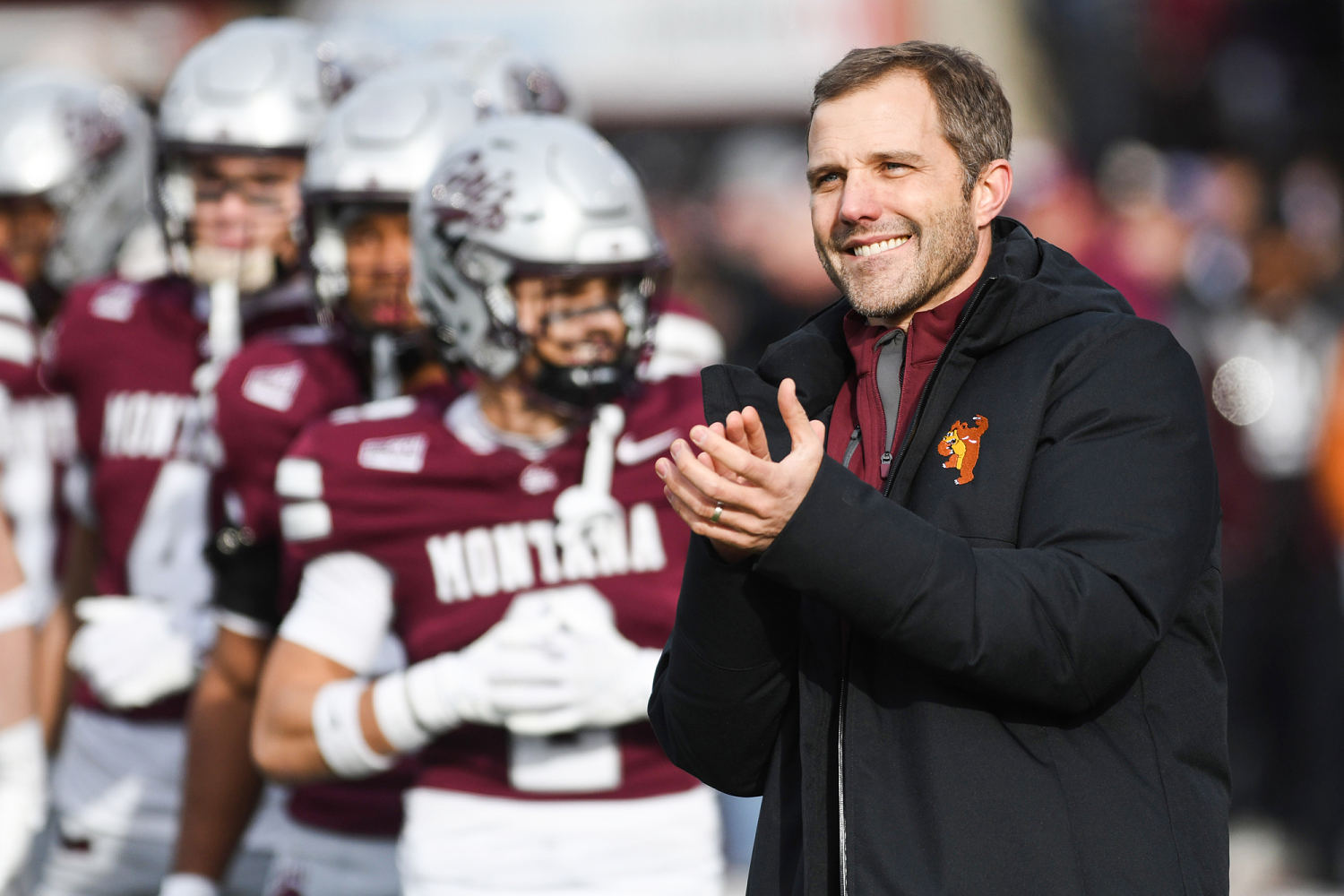
Montana Senate candidate Seth Bodnar, who served as president of the University of Montana. (Michael Thomas Shroyer / Imagn Images via Reuters file)
“It’s wise for them to do those things,” said Matt Bennett, co-founder of the center-left group Third Way. “I think the problem is that the ‘D’ next to your name in those states is the kiss of death, because the Democratic brand writ large has been so badly degraded in those places.”
“The reality is that we have a dramatically shrunken Senate map, which is horrible and something that we need to work on in the long term,” Bennett added. “But in the near term, there’s no fixing that in those deeply red states. So the only way we could succeed is by supporting independents.”
The tactic is backed by progressive strategist Faiz Shakir, an adviser to Sen. Bernie Sanders, I-Vt., who praised the Democrats in Nebraska and Idaho for dropping out.
“In South Dakota and Montana, independents Brian Bengs and Seth Bodnar are competing in 3-way races where the Democrat is still on the ballot — thus making it harder for them to have a real shot at winning,” Shakir said on X, predicting that the independents would “absolutely overperform what a Dem would get one-on-one against these sitting Republicans in these states.”
If Bankhead were to quit, a spokesperson for the office of Montana Secretary of State Christi Jacobsen, a Republican, said that Democrats would be required under state law to find another candidate rather than leave the ballot blank.
“The withdrawal deadline for Montana’s general election candidacy is August 10. Montana law states that if a party’s candidate withdraws, the party shall appoint someone as a replacement. That deadline is August 19,” the spokesperson told NBC News in an email.
Sen. Steve Daines, R-Mont., who is retiring and vacating the seat in question, predicted Alme would win whether he’s competing in a three-way contest or a two-way race with any candidate.
“It’s pretty clear that Seth Bodnar is a Democrat,” Daines told NBC News on Wednesday. “This is a deceptive ploy that Montanans are seeing through.”
The National Republican Senatorial Committee said the independent candidates in each of those states are indistinguishable from the Democrats on the issues.
“Democrat-backed independents all support the same socialist policies and middle-class tax hikes that made Democrats toxic across the country, and Republicans will defeat them in November,” NRSC spokeswoman Joanna Rodriguez said.
At a time when Democrats are craving fighters, Tanden said the irony is that “fighting harder might be having the Democrat come out of the race so the independent can win” in those red states. But she added that Democrats aren’t assuming the independents caucus with them in the Senate.
“My only hope — if they are independents who just are not rubber stamps for Trump, that would be a huge advance. So I don’t know what they’ll do,” Tanden said. “I don’t know if they’ll caucus with Democrats. I don’t know if they’ll caucus with nobody. I don’t know if they’ll caucus with Republicans.”
Source: “AOL General News”
