


A fabled highway brought the tourists back to Big Sur. Californians say it’s too much
A fabled highway brought the tourists back to Big Sur. Californians say it’s too much

Graig GraziosiSun, August 16, 2026 at 12:17 PM UTC
1
The Independent and Yahoo will earn a commission from purchases made via links in this article. Pricing and availability are subject to change.
Big Sur is either thriving or in big trouble this summer — depending on who in the idyllic strip of Pacific Coast Highway you talk to.
For sure, California’s fabled, panoramic tourist mecca is packed again. After nearly three years in which the cliffside roadway of Highway 1, aka the PCH — a muse to Beat Generation poets and Hollywood legends alike — was closed for business due to landslides, the fabled two-lane drive reopened in January to much ballyhoo from local businesses, many of which depend on tourists to earn a living.
But the first return of summer tourism — spurred by effective marketing — may be turning Big Sur into a victim of its own success.
The stretch’s restaurant and retail guests have increased by 40 percent from last year, and traffic heading north at Ragged Point—Big Sur’s southern tip —has increased by 900 percent year over year, according to data from the California Department of Transportation.But those same features that make Big Sur an attractive destination for filming — its craggy cliffs, winding highway, and its untamed, unobstructed views of the ocean — are also attractive to everyone else, and it’s taking a toll on the locals.
“Free-for-all” is how Marcus Foster, of the Keep Big Sur Wild conservation nonprofit, described the influx of visitors.
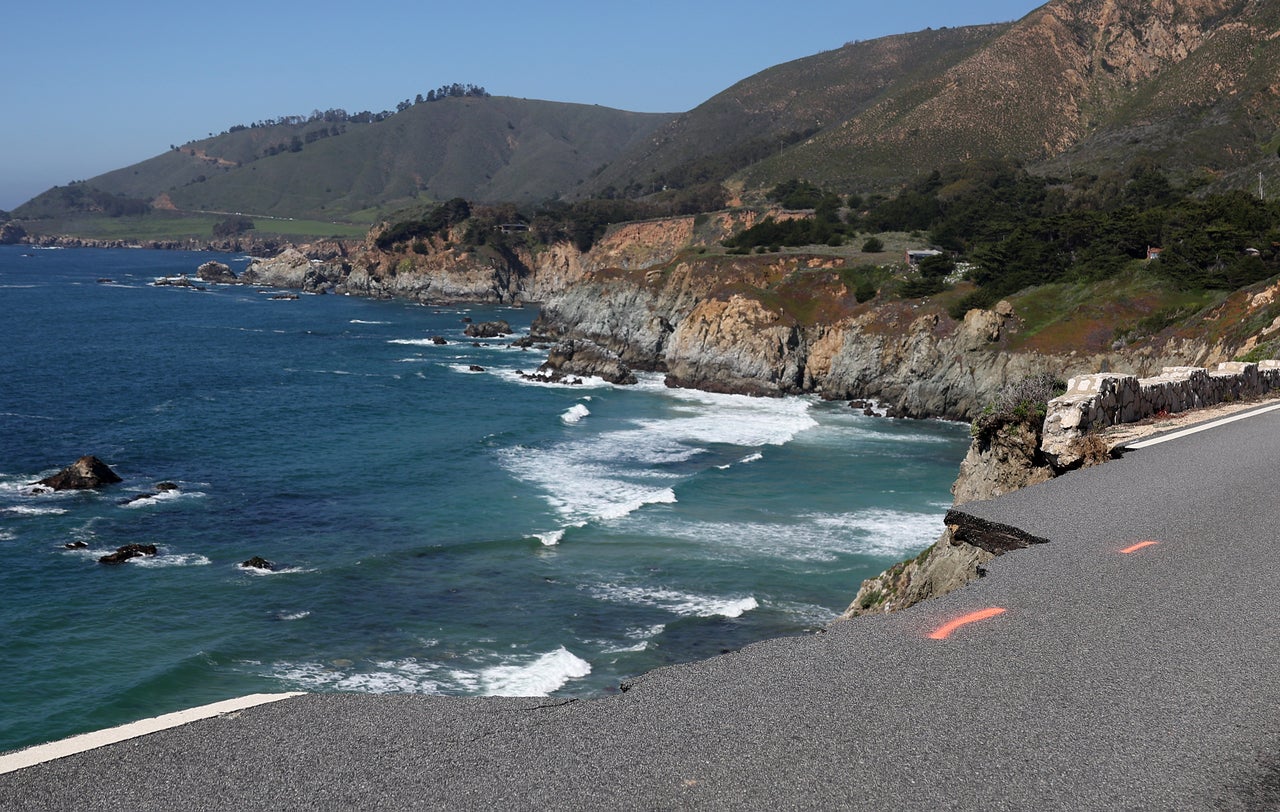
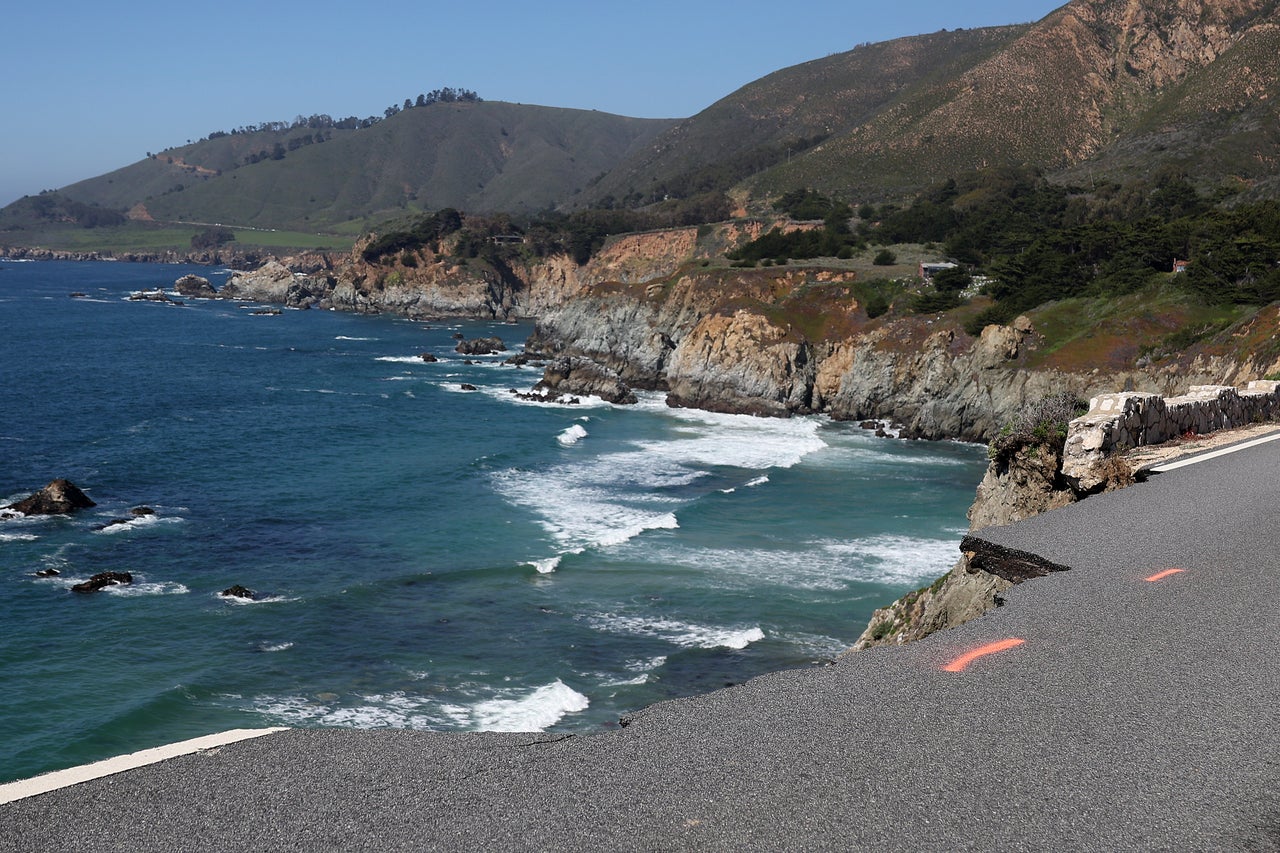
A hole is visible where a section of southbound Highway 1 broke off and fell in the ocean at Rocky Creek Bridge in 2024 following heavy rains, part of the destruction that spurred the revamp of the fabled higheway stretch (Getty Images)
"It tends to just be this unmanaged, free-for-all sometimes, is how I feel it when you drive this highway," he said during a meeting of the Big Sur Multi-Agency Advisory Council in late May. "So how do we get money funding to better manage visitation to the area?"
The organization claims on its site that many tourists aren't even stopping in Big Sur to actually explore the area but just to follow social media trends and grab a selfie near its iconic cliffs, bridge and shoreline.
But that isn't new. Foster told The Independent that "day trippers" have been traveling south to snap selfies along the beautiful coastline for years and that congestion on Bixby Creek Bridge is old hat.
"I've been talking about Bixby Bridge for over 10 years ... there's 20 spots and 200 cars trying to park there. That's been going on for 15 years," he said.
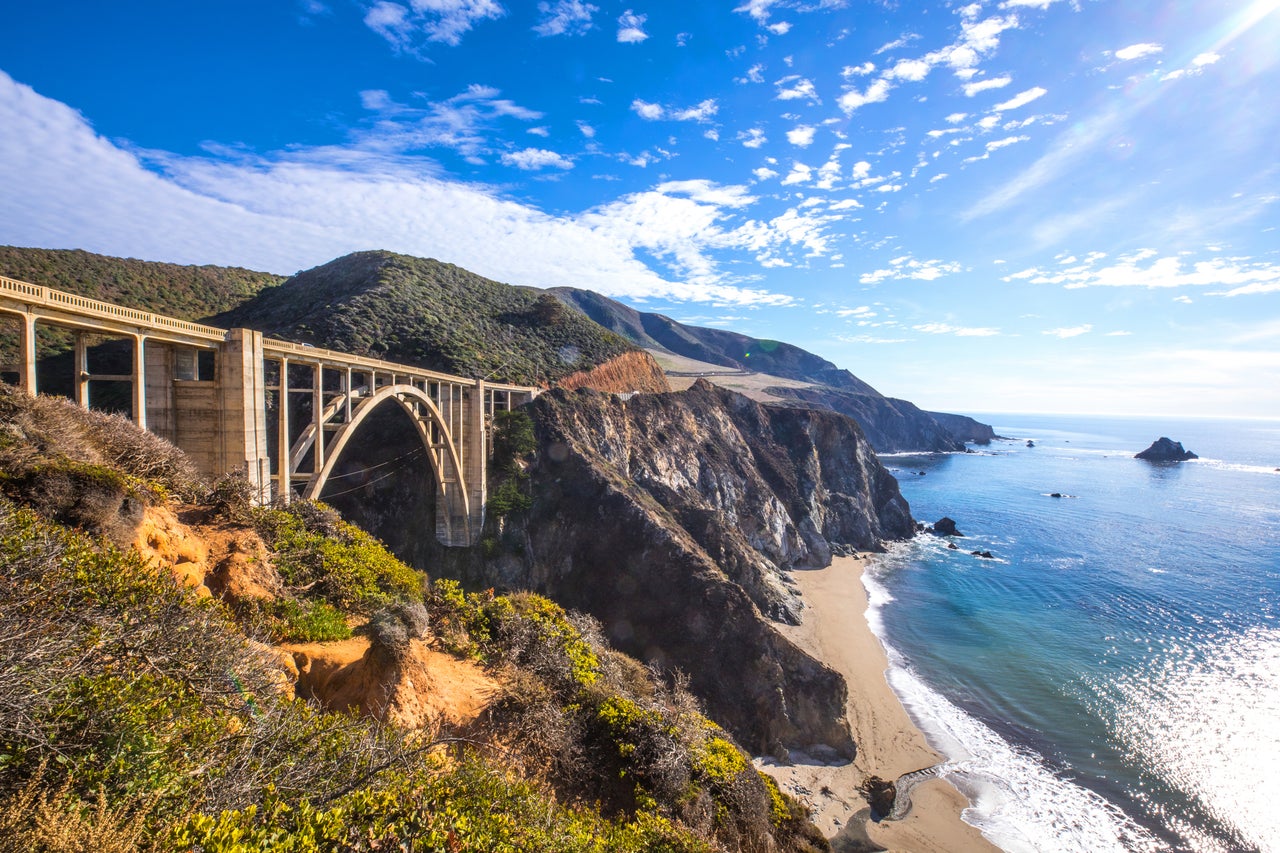
A view of the iconic Bixby Creek Bridge in Big Sur, California. The bridge is a popular stop for tourists looking to take selfies, but the limited space and parking on the bridge has caused major backups during holidays and created dangerous conditions for visitors and drivers crossing the span. (Getty Images)
A 90-mile stretch along the 656-mile Pacific Coast Highway, Big Sur is renowned for its cliffside vistas that overlook the cobalt-blue ocean and crashing white-peaked waves. Its beauty has drawn celebrities looking for hideaways from big cities or simply venues for a landmark occasion.
Actors Anne Hathaway, Natalie Portman and Jack Black all held their weddings in Big Sur. Some of the area’s notable residents have included the late novelist Henry Miller (Tropic of Cancer)— and his residency inspired legendary Beat poet Jack Kerouac to visit multiple times — as well as photographers Ansel Adams and Edward Weston and, more recently, Red Hot Chili Peppers bassist Flea and Nine Inch Nails frontman Trent Reznor.
And Big Sur’s majesty has reached across the nation, and even globe, thanks in large part to its frequent use in films and television. The area is featured prominently throughout HBO’s Big Little Lies, but has also been featured in at least 24 films, according to the Monterey County Film Commission. Those films include entries like Basic Instinct, Escape to Witch Mountain, Doctor Doolittle and Play Misty For Me.
But now, said Foster, after the reopening of Highway 1 in January, it now takes him an hour and a half to drive from Monterey back to Big Sur when it used to only take him 45 minutes.
The county's Board of Supervisors voted in May to consider a 12-month ban on parking on Bixby Creek Bridge. Parked cars on the bridge can slow traffic and impede emergency vehicles, Foster said, and noted that some visitors will dart out into the roadway to cross from the shoulder to the ocean-facing side of the bridge, creating hazards for themselves and drivers.
Advertisement
Over Memorial Day weekend, the bridge became a virtual parking lot due to the number of visitors stopping and exiting their vehicles for the chance to take a photo. The scene troubled local officials, including a firefighter who remarked that an engine could not have passed through the crowd that day.
"What I experienced at the Bixby Bridge, it scared me because I knew at that point a fire engine actually could not make it through," Sean Edwards, a CalFire captain, told KSBW.
Even if the Board of Supervisors enacts a 12-month moratorium on parking, it's unclear how they intend to enforce the ban. Foster told The Independent that Big Sur no longer has a resident sheriff, and that only two California Highway Patrol officers patrol the stretch of highway that runs through area.
The Independent has requested comment from the California Highway Patrol and the Monterey County Sheriff's Department. The Independent also requested comment from Monterey County District 5 Supervisor Kate Daniels, but she was unavailable for comment before publication.
Meanwhile, local businesses are busy keeping up with the drove of visitors taking advantage of the re-opened roadway.
Kirk Gafill, co-owner of the Nepenthe restaurant and the president of the Big Sur Chamber of Commerce, told the LA Times that he's seen a 45-percent boost in guest volume since Highway 1 reopened. While the extra business is obviously welcome, Gafill said he and other local business owners have been focused on trying to recruit and retain employees to meet the increased demand.
And that effort has been hampered bny the far longer commute times now attached to having a job in the area.
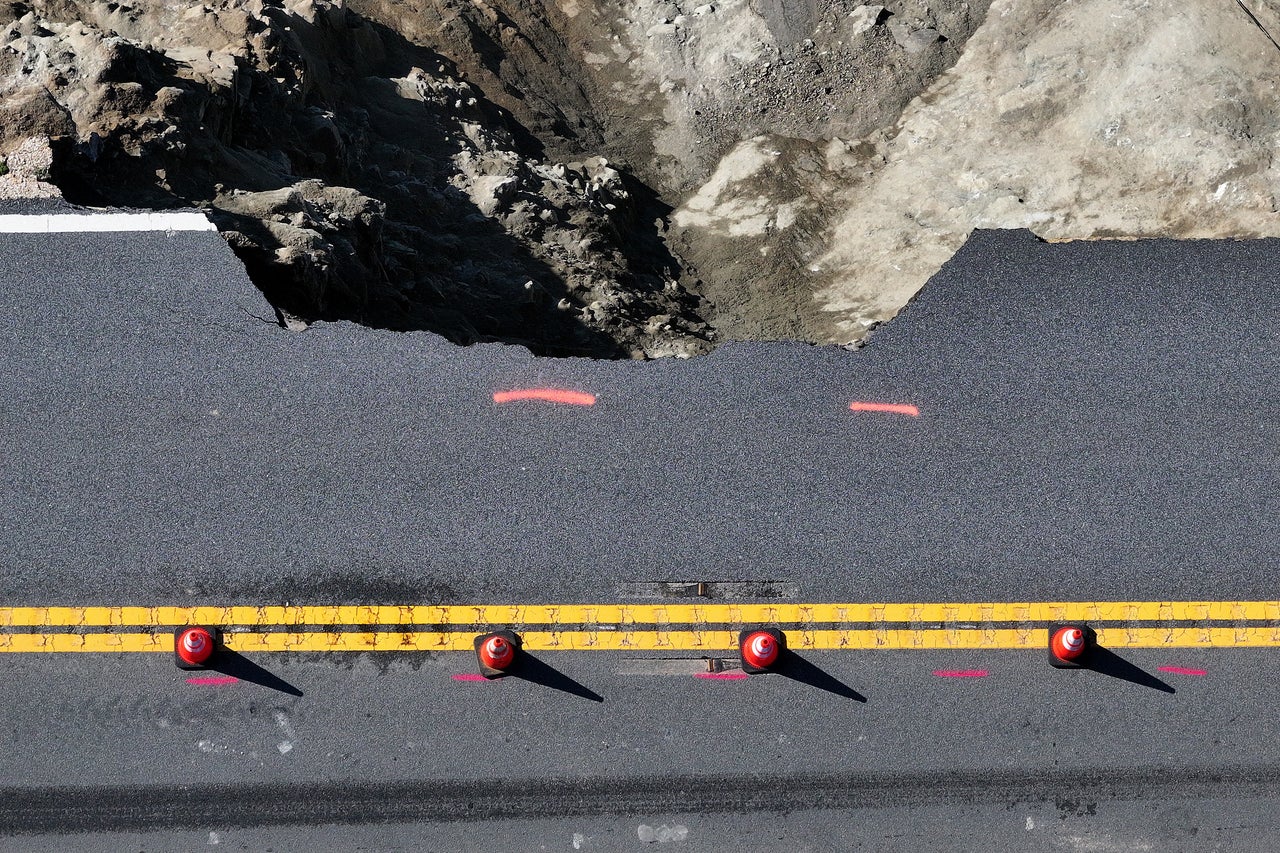
A portion of Highway 1 that broke away following heavy rains in 2024. (Getty)
Still, not everyone sees the uptick as a summer bummer.
Down at the Ragged Point Inn—a business directly affected by the lack of access to Highway 1 from the south due to the closure — rates had dropped as low as $149 per night last fall, before the reopening. Diane Ramsey, whose family owns the inn, told the LA Times that business was up more than 100 percent since the reopening, and room rates back over $200 per night.
“I know not all of our neighbors are having the same lift, but everybody is doing better," she said.
The increase in business is no doubt beneficial to local businesses, but Monterey County now has its hands full trying to balance protecting the landscape and residents while accommodating its visitors.
There are proposed solutions on the table. The Destination Stewardship Plan, accepted in 2020 by the Monterey County Board of Supervisors, has already made some changes, like installing a traffic counter to allow "stakeholders to better understand and prepare for fluctuations in visitation," and a crackdown on illegal camping along Highway 1. It also calls for a ban on parking in a particularly congested portion of Bixby Bridge.
Foster and his group want solutions that keep to the ideals of Big Sur’s Land Use Plan; of preserving the natural beauty of the region without compromising it for the sake of tourist revenue.
He said he and his group are not anti-tourist; he simply wants to ensure that everyone—whether they're lifelong residents or folks who are just passing through—can enjoy the vistas without destroying them.
"We want people to have a short, but stunning visit," he said, quoting former Monterey County District 5 Supervisor Karin Strasser Kauffman, who served when the Land Use Plan was drafted. "We want them to drive the highway, enjoy the scenic views, and then move on."
Source: “AOL General News”
